A Critical Analysis by: Rachel Dunn
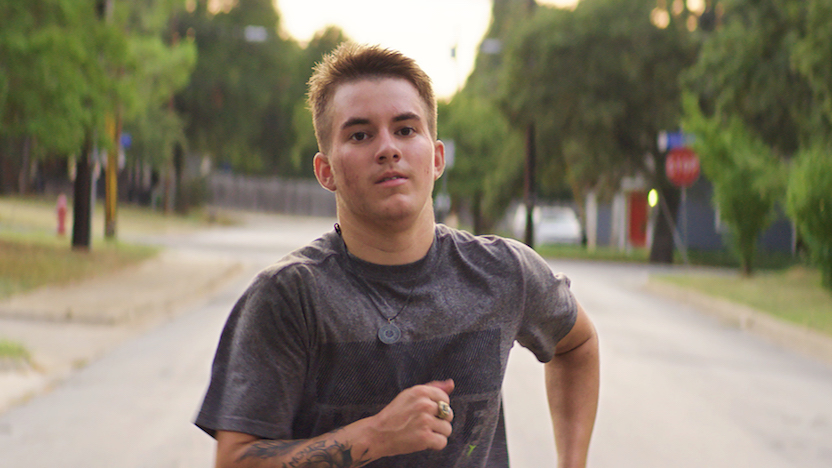
At the Reelout Film Festival’s premiere, I was able to see Changing the Game, a documentary directed by Michael Barrett about three transgender high school athletes and the challenges they face, inside and outside of their sport based on how they identify. The film begins with Mack Briggs, a star wrestler and high school senior from Texas. Though Mack fully identifies as a male and has been taking testosterone, he is unable to compete against other men until he undergoes full reassignment surgery. Mack wants to wrestle in the male division, yet he is still met with backlash from the media and especially from within his community since he has amassed two female state champion titles after being undefeated both years.
The next teen focused on is Sarah Rose Huckman from New Hampshire. Sarah Rose is a transgender female skier, who unlike Mack is able to compete in her gender’s division. Though Sarah does not face much backlash from her community for competing against other women, she does mention at one point in the movie that she holds back her abilities in order to avoid receiving any backlash. Sarah’s major plot point in the film follows her involvement in state politics and the passing of Bill HB 1319, which enables all transgender people to be protected under the law from discrimination. Still being in high school, Sarah’s involvement in politics shows how important these rights are for any transgender person especially, those in their teens who struggle with fully being accepted.
The final teen featured in the documentary is Andraya Yearwood, an African American, transgender female runner from Connecticut, who, like Sarah, is also able to compete in sports based off of her self-identification. Though she faces resentment from her community, Andraya inspires another transgender female runner, Terry, to feel confident in coming out, and competing.
One of the most important and most moving aspects of the film is the relationships the teens share with their families. Although it may have been hard for them to understand at first, especially seen in Mack’s storyline, it is clear that having their teen feel respected and loved outweighed the idea of not accepting who they are. As a result of the progressive views of the families, the negativity of the media and the community towards the teens is much more prominent. Within each of their hometowns, no matter if the state has more progressive laws, the mindsets within the community clearly exhibit binary thinking. This refers to the inabilities of some people to understand or respect people that do not fit into their gender mold and can lead to excessive hate both in person and online. Mack, in particular, deals with both. In person, parents of fellow athletes, community members and even talk show hosts are filmed verbally attacking Mack for his accumulating wins in the women’s division. People often have the idea that athletes, like the ones featured in this documentary, choose to be transgender for the sole purpose of advancing athletically. In reality, transgender individuals are more at risk once they identify as transgender. This means that for transgender people who “cannot pass for what [they] are not, [they] have to work harder to pass into or through the organization” (Ahmed 128) to be treated as human beings. It is simply not possible for transgender people to fully be themselves when they are constantly portrayed in such a negative way. People who are unable to understand it see being transgender as a choice, but why would anyone choose to be transgender when they are treated so maliciously?
Cyberbullying, especially in today’s society, makes hate-speech more accessible than ever before. People you do not even know are able to comment their opinions on your life. On social media platforms all over the internet hate speech can be found. As long as there are comment sections people will use it to shame others with the added benefit of remaining anonymous and therefore avoiding any repercussions. Mack, again, is the most affected by this in the film. He explains how gaining media attention for his performance in the women’s division makes him a target for hate and how the comments used to affect him so much that he tried to take his own life. With the support of his family, his school and his girlfriend, Mack has been able to find strength in his own worth. For any person, “to be in question is to question being.” (134) Once other people target you and diminish your worth, it makes you start to do the same. This film was very good in portraying the real issues with cyberbullying and especially in making it clear the added effect this has on people who are transgender. As the film points out, 40% of transgender teens take their own lives, which is very much correlated with hate they receive in person and online. However, the film also shows how important it is for transgender people and other members of the LGBTQ+ community to have strong and supportive relationships with their families for their own self-acceptance.
Another important issue highlighted in the movie is the intersectionality of race and gender, portrayed in Andraya’s storyline. Intersectionality, a concept created by Kimberlé Crenshaw sets out to identify “the multiple dimensions of discrimination that Black Women face.” (Kaufman, “Intersectionality for Beginners”) Being an African American transgender female, not only is Andraya dealing with the oppression from her race and gender but also from her already misunderstood self-identification. Andraya’s mother highlights that statistics show black transgender women are five times more likely to be killed than any other transgender person. In America, there is a clear divide between genders, and even more between race in education, income and victims of violence. This highlights that gender and race must be acknowledged together to truly understand oppression faced by minority groups, especially like Andraya. Andraya’s story sheds light on the importance of understanding people because they are more than the aspects of themselves that they cannot change.
The film does an impressive job in recognizing serious issues within the LGBTQ+ community that often goes unnoticed, while also focusing on the teens ability to overcome the societal disadvantages they face. Being that it is a documentary as well, the impact it holds is so strong because it is a reflection of real stories and issues. I recommend anyone to see this film because of the lasting impact it has and the awareness it raises in learning to understand people for who they are, not what they are told to be.
Work Cited
Ahmed, Sara. “Being in Question.” Living a Feminist Life. Duke University Press, 2017, pp. 128-134.DOI: 10.1215/9780822373377
Kaufman, Peter. “Intersectionality for Beginners.” Everyday Sociology Blog. W.W.Norton, 2018. http://www.everydaysociologyblog.com/2018/04/intersectionality-for-beginners.html#more.
 Critical Film Review: Reelout Blog